Inside a local credit union that chooses community over profit
In the past, readers have always asked me where they should bank instead of Chase, Bank of America, or Wells Fargo. It's a big question to answer.
To that end, comedian, performer, and writer Kendall Allison wrote about their experience switching to a local credit union in Brooklyn that puts community above all else.
According to its 2025 impact report, this credit union has safeguards for undocumented members' savings accounts, ensuring their assets are protected in case they are detained. Every credit card holder gets the same APR of 17.74% regardless of their credit score. Kendall even hosted three comedy shows about the solidarity economy at one of its locations.
Honestly, it sounds like a dream bank. Read on to learn about Brooklyn Coop Federal Credit Union.
— Leo
Inside a local credit union that chooses community over profit
Growing up, my parents banked at Wells Fargo. During the 2008 housing crisis, Wells Fargo’s corrupt practices were exposed, and my parents switched to a Northern California-based credit union called Patelco, a member-owned credit union that invests in affordable housing, child development, food security, and financial education. I felt aligned with Patelco, but I switched banks because it felt important to plant my financial resources in the place where I live.
Last summer, I finally opened an account with my local credit union, Brooklyn Coop Federal. I heard about them through a friend, and then through organizing with the Cooperative Economics Alliance of New York City.
Last summer, I finally opened an account with my local credit union, Brooklyn Coop Federal
I didn’t make the switch to Brooklyn Coop on my own: After moving to Brooklyn at the beginning of 2022, I got involved with my local Resource Generation chapter the following year. They organize young people with access to wealth and/or class privilege toward the equitable distribution of money, land, and power.
Part of our organizing is supporting members to divest from the stock market and corporate banks and invest in more values-aligned institutions, such as local credit unions. It’s way harder to make these kinds of changes without peers who can push you towards your stated values and support you to go against the grain.
Brooklyn Coop was started by four community organizers in 2001
Brooklyn Coop’s mission is to “further wealth-building, opportunity, and resilience in our communities by offering just and affordable financial services.” They started in 2001 when four people in Bushwick organized their neighbors to try a different way of banking. They offer services and products that are comparable to traditional banks, and it feels good to know that my savings are turning into loans for local businesses and families instead of wreaking havoc around the globe as part of opaque financial products that fund ecological and social destruction.
Here are just a few things Brooklyn Coop offers:
- 3.75% high yield savings account
- small business loans, including for worker co-ops
- free monthly financial education workshops
- support getting ITINs
- credit-rebuilding accounts
- competitive mortgage rates
- credit cards – all members have the same interest rate, while at bigger banks, those with higher credit scores or more money get lower rates
Corporate banks are accountable to their bottom line, while credit unions are accountable to their members. Brooklyn Coop prioritizes transparency and direct communication. Each year, there is a member meeting where they share updates on their finances, programming, and future plans. They also have an overview of what’s shared during the meeting available on their website year-round in English and Spanish.
In addition to being reliable and values aligned, I also value my face-to-face relationships with Brooklyn Coop’s staff. When I ask questions through their messaging platform, I recognize the names of the people who are replying to me.
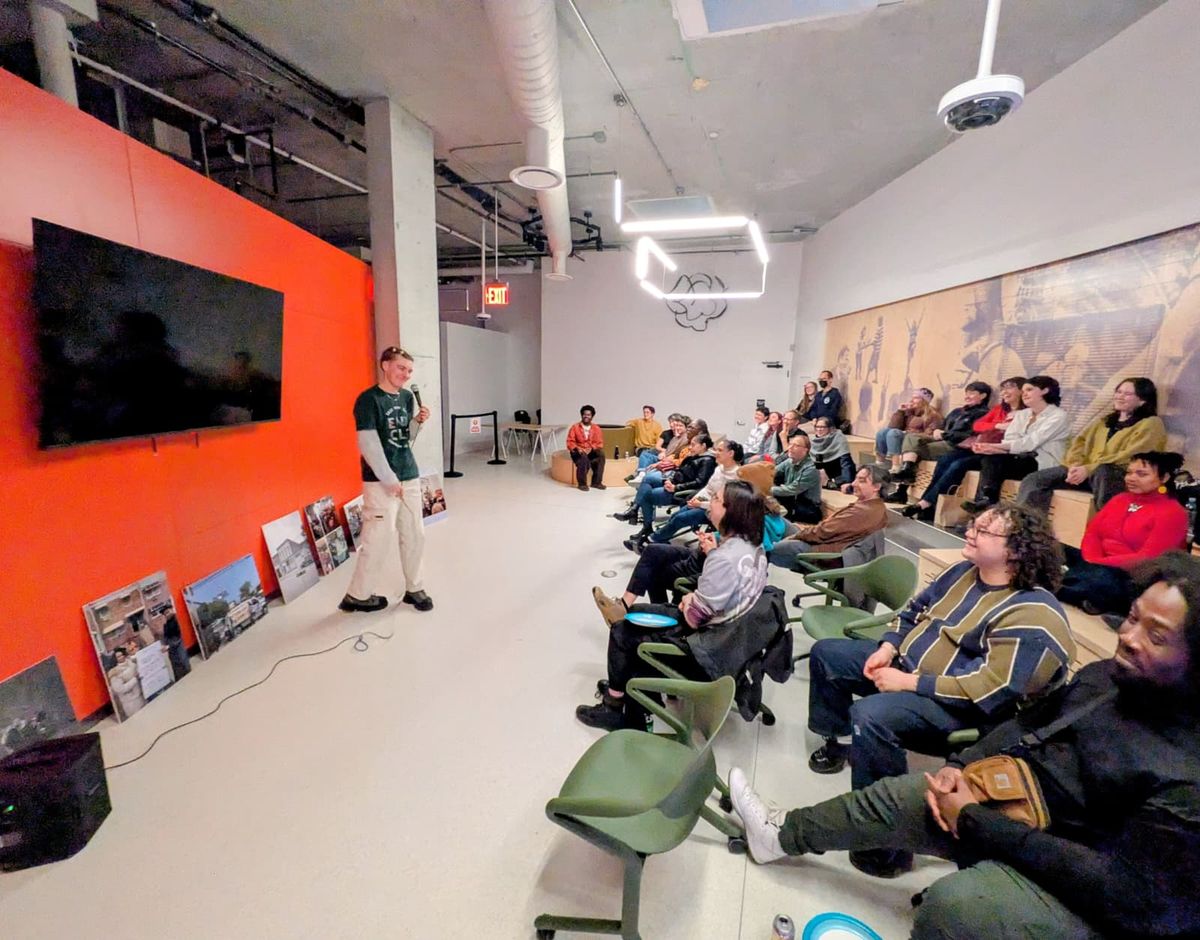
I started hosting my comedy shows at Brooklyn Coop's Bushwick location
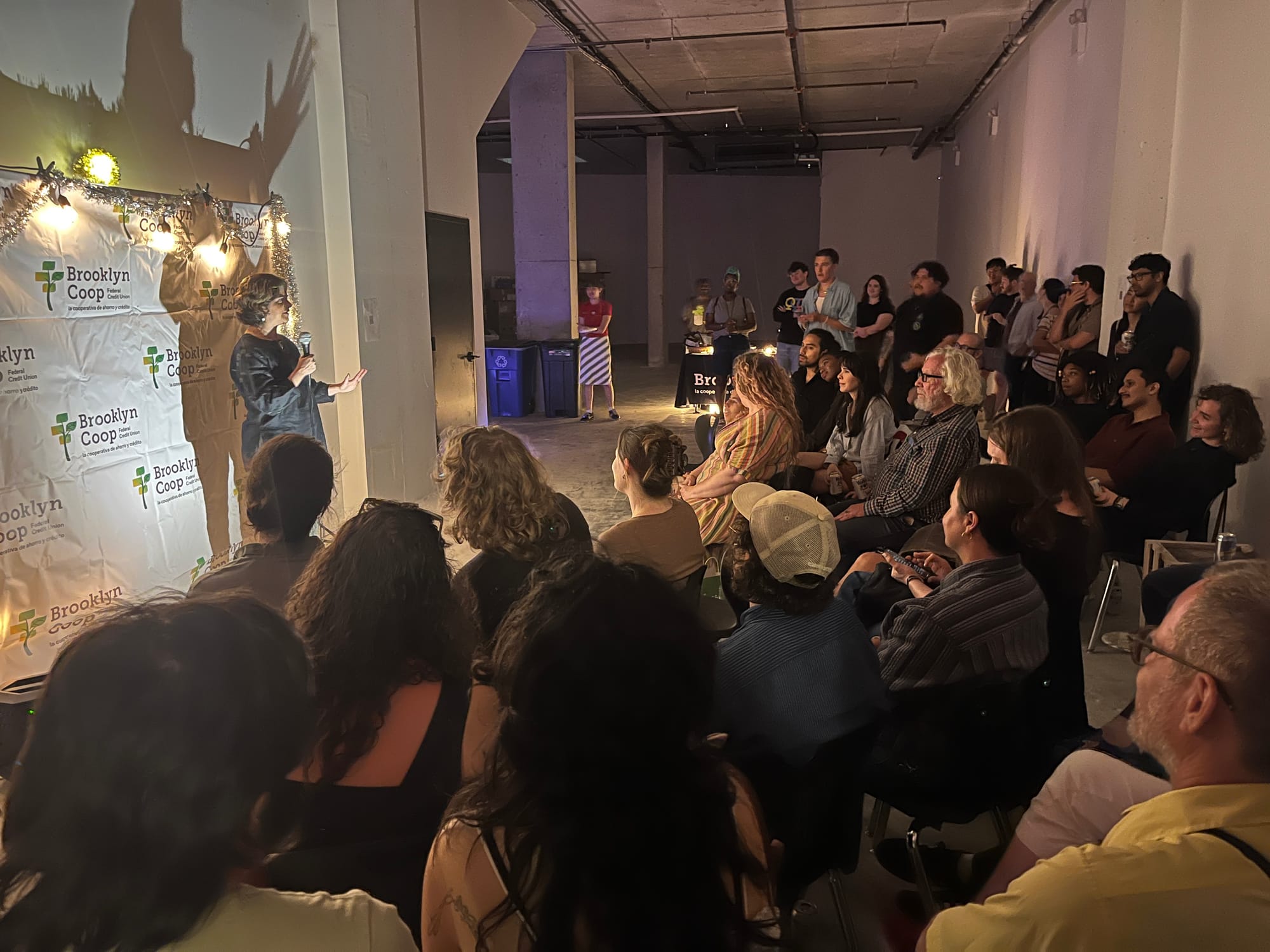
I also took a class with one of their staff members last spring, Amanda. She announced that the credit union had an event space if anyone ever wanted to use it, and the gears started turning in my brain.
I run a comedy show that doubles as political education about the solidarity economy, and it seemed like the perfect fit. We have now done three shows and are working on our fourth. In between stand-up comedy acts, and laughing about the absurdity of capitalism to keep from crying about it, we share about and fundraise for a solidarity economy organization in the city (like land trusts, worker coops, advocacy groups) , and about Brooklyn Coop.
People walk away from the shows with information on how to switch if they’re interested. Switching to a credit union will not end capitalism, but it is a choice that can reduce harm in the long run.
Making this switch has helped expand my definition of return on investment
There is social, spiritual, and communal value in divesting from traditional financial entities, which we cannot necessarily count in the same way that we can count dollars, but we can feel. My money not only goes toward other people who live in my city, but toward financial practices and structures that are visionary and trustworthy.
There are credit unions all over the country that are offering vital, local alternatives to faceless multi-national corporations that do not care if we live or die.
In these terrifying times, I feel more grounded and sane when I redirect my attention to the local, to the scale of my own life. In the words of the Brooklyn Coop Federal Credit Union, “The choices we make as consumers, as citizens, as custodians, matter tremendously.”
I love their use of the word custodian, it calls to mind the tending, safekeeping, cleaning up, and nurturing that we all get to do for ourselves and each other. Money is one resource of many that we can choose to direct towards care instead of extraction.
The words of theater-maker Jenn Kidwell have been ringing in my mind lately: “Money is merely an agreement.” Agreements can be renegotiated, re-shaped, thrown out and begun again. There is no escaping the harm that money has made possible, and there is also no limit on the healing and transformation it can support.