

3 tips for people who are *still* overspending on Postmates
I feel like a broken record, atp!

Hello to the 4,891 hotties who subscribe to this newsletter! Thank you for being here.
I’ve written about overspending on Postmates so many times — I’m honestly starting to feel like a broken record! In my client work, I’ve been noticing that people are spending more money on food delivery right now.
After a long workday and a dizzying news cycle, trust me. I get it. We all need comfort, and most of the time, it comes in the form of a hot meal prepared by someone else.
I’ve been lucky lately. I just moved in with my girlfriend and she’s an amazing cook. She makes big dinners, and I take the leftovers to work the next day. I feel so taken care of and supported by her. I wish every queer and trans person this exact feeling — especially right now.
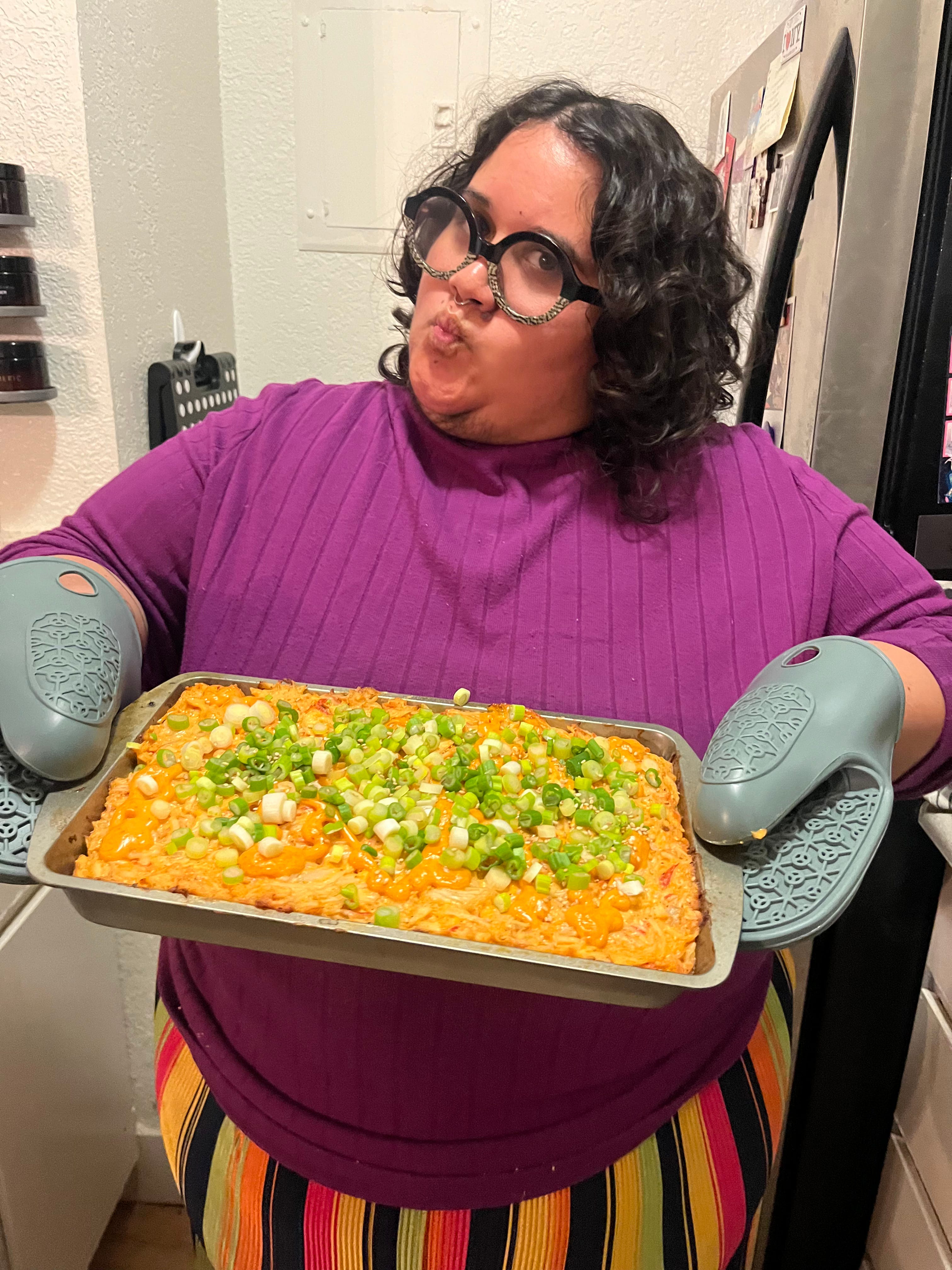
Before she moved in, my fridge was in bachelor mode: completely empty, except for sparkling water and random frozen meals from Trader Joe’s. I have to admit: I love fast food, and I used to eat a lot more of it before Melba moved in. I moved around a lot as a kid, and I find comfort in food that tastes the same in every city.
Now, I’ve lived in the same neighborhood for 4 years, and I order from the same restaurants because I always crave consistency. The task of buying groceries, trying a new recipe, and having the food taste weird was not a risk I was willing to take. So, really, I get it.
When I meet with clients for the first time, I ask them if they make time to connect with their friends on a regular basis. They point out, rightfully so, that leaving the house costs money. Simply being together at a restaurant, coffee shop, or a queer-led event costs money.
I keep hearing: “I can’t afford to go out with my friends!”
But when I audit their spending, it turns out, people are spending hundreds on Postmates to eat alone in front of the TV — and they would much rather spend that money connecting with friends over a meal at a restaurant.
Right now, we need to spend our resources wisely — on connection and care. If it’s not catching up at a restaurant, we must make time to make meals together.
Bestie, I need you to have at least $1,000 in your savings account — especially in these times. And if cutting back on your food delivery habit is gonna make that happen, let’s do it together.
💌 Coming soon: I’ll write about the difference between scarcity mindset and actual scarcity. I’ll also write about some anti-capitalist strategies to carry us through the Trump regime. Plus, I’ll be updating my guide on how to become a war tax resister. Make sure you’re subscribed so you can get these updates!
❤️🔥 We’re still accepting new group coaching clients! Our six-month group, Budgeting for a World on Fire, starts on Thursday, April 10. Registration costs $750, with payment plans available. If you're interested, reach out to Andrea at hello@queerandtranswealth.org. Register by April 7.
Here are 3 tips for people who are *still* overspending on Postmates
1. Track your food spending in 3 categories
Dining out alone: For fast food, Postmates, morning coffee, vending machine snacks, or any decision fatigue meals — food that you order for convenience, not connection. If you’re spending money on meals for you and your partner, this includes meals you order because neither of you wants to cook.
Dining out with friends: The times you dine out to connect with friends. If you’re spending money on date nights with your partner, put that expense in this category.
Groceries: Trips to the grocery store
Tracking food spending in these categories is such a game-changer for people. The money spent on dining out alone puts a numeric value on our loneliness under capitalism. It gives us physical evidence of our inability to make decisions to take care of ourselves.
This motivates people to allocate more money towards dining out with friends and cooking meals at home.
2. Pick up your food instead of getting it delivered
If it’s accessible to you, I recommend picking up your food instead of getting it delivered.
From a practical standpoint, you save money on delivery fees. What this actually does to your mindset, though… *chefs kiss* Your brain starts to think: “Do I really want to get in my car or walk to this restaurant? Or do I have something here that I can make?”
When using this tip, one of my clients told me that they got in the habit of eating a quick snack when making this decision. That fruit bar or can of Pringles — whatever your favorite snack is — fills them up enough that the decision to make or order food doesn’t feel as urgent.
It also helps people empathize with the underpaid delivery drivers who have to drop off your food in the first place. And if you don’t tip your delivery drivers… I’m side-eyeing you very hard, babe. Get your shit together.
3. Put the days that you’ll be ordering out on your calendar
Choose the days of the week that you’ll be ordering food and put them on your calendar.
Here’s an example based on many clients’ situations:
Sheila spends $650 per month on dining out, with $450 spent on dining out alone and $200 on dining out with friends. We’re trying to cut down $100 from her total food spend, specifically from dining out alone. She also wants to spend $50 more per month on dining out with friends.
Dining out alone $450 —> $300
Dining out with friends $200 —> $250
Total: $650 —> $550 ($100 total decrease)
Our new budget for dining out alone is $300, and dining out with friends is $250. Realistically, we can’t cut down on decision fatigue spending altogether because Sheila works 45 hours per week and organizes community actions in her free time.
At $30 per meal, Sheila gets 10 decision fatigue meals per month. Some weeks she can get 2 meals, and others she gets 3 meals. Sheila is a lot more frugal during the first half of the month, so we leave the 3-meal weeks towards the end of the month.
We identify the days that Sheila needs to get takeout the most. In this example, let’s say it’s Tuesdays and Thursdays. Instead of feeling guilty for ordering from her favorite Thai spot, Sheila feels more confident in ordering a big meal for lunch so she can have leftovers for dinner.
The simple, clear boundary of $30 per meal, 2-3 meals per week, helps her understand when she’s going over her limit.
❤️🔥 We’re still accepting new group coaching clients! Our six-month group, Budgeting for a World on Fire, starts on Thursday, April 10. Registration costs $750, with payment plans available. If you're interested, reach out to Andrea at hello@queerandtranswealth.org. Register by April 7.
And of course, if you have extra money to spare, buy a queer, trans, immigrant friend some lunch this week. We could use some extra love right now. <3
Feeling attacked and inspired at the same time! LOL
this was really helpful to read !!!