

FUTURE ELDER: From financial chaos to a life worth dreaming
Slowly, I made choices imbued with care.

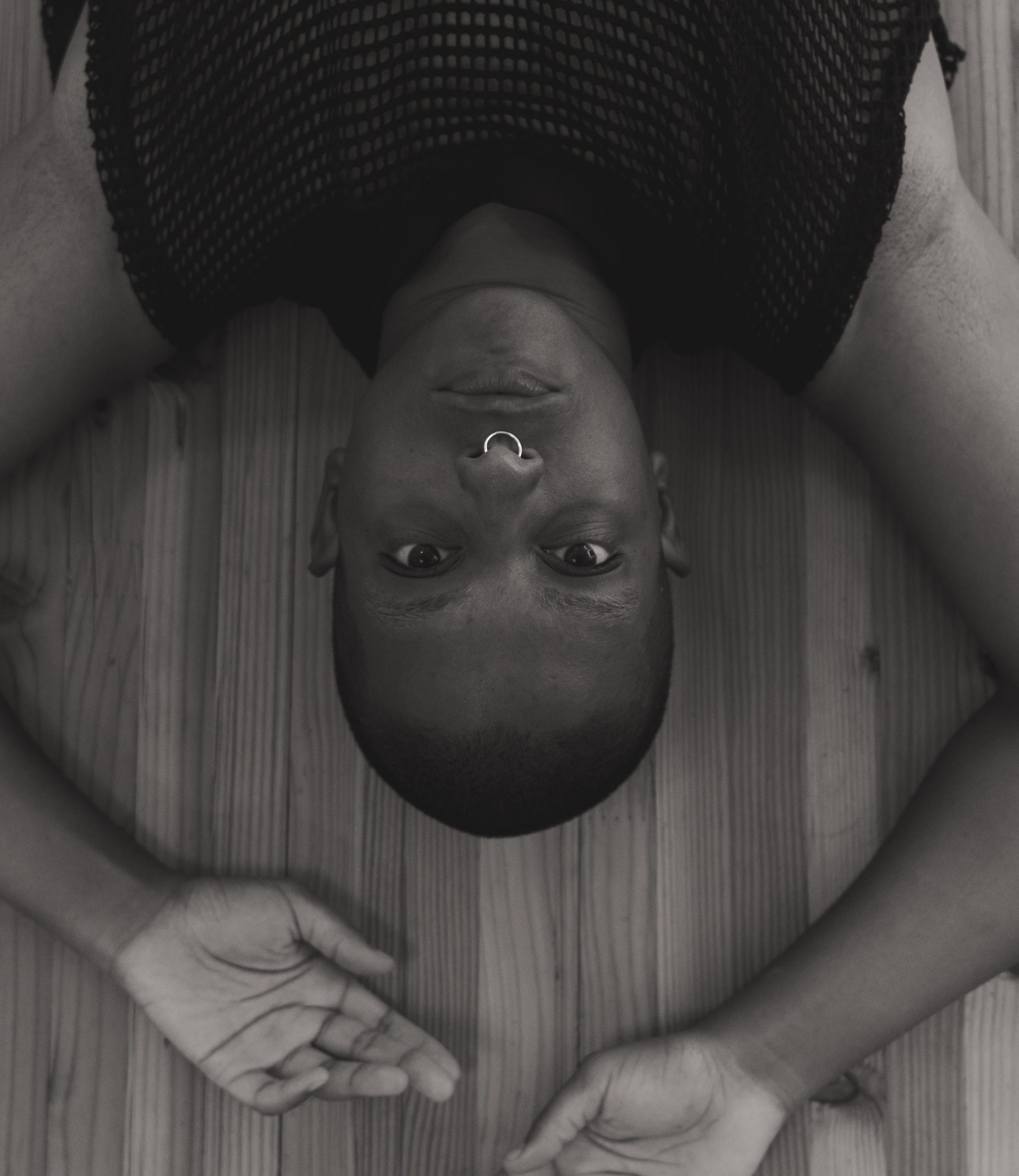
In 2014, I was $140,000 in student loan debt, dodging bill collectors, grieving my mother’s death, and not convinced I wanted to stay on the earth. I was 26 years old with no income, no savings, and I was financially dependent on people I didn’t trust.
I had a loose grip on living.
I didn’t imagine I would live long. That outlook made my choices feel insignificant. It was almost fun to see how far I could push it. How much I could fuck up and say a big Fuck You! to a life and family that never fit.
I tried drinking, smoking, eating too much, eating nothing, fucking, and fighting. None of it abated the hopelessness I felt. I wrote obsessively. Filling notebooks with journal entries, letters to my Mother, song lyrics that stuck, and ideas for art projects.
Slowly, I made small choices imbued with care. While healing my money trauma and relationship to work, I built trust with myself. I created financial protections for my present and future self.
Here’s how I did it.
An expense I could never afford
After my mother died, the logistics fell on me, her eldest “daughter”. Imagine my to-do list:
Tell my grandma her daughter had died
Find affordable cremation services
There is something despicable about shopping for cremation. It disturbed me vying for a deal, calling business after business, hoping the next quote will be closer to $free.99. The least expensive option was $2,000 after taxes. I found the least expensive option and still I couldn’t afford it. Borrowing money for my mother’s cremation disgusted me. Even worse – I never paid it back.
I hadn’t developed the ability to say my true needs yet, to say out loud, “I need help. I can’t cover this expense. Will you gift me this money?” So I hid under the guise of a loan.
This was the last time I borrowed money.
Credit chaos
After my mother’s death, it took more than a year to have access to the part of me that can plan or strategize. Caring for my financial health was very low on my list of priorities: eat something other than a potato, shit, smoke a cigarette, stand up — a billion other thingsbefore caring for my credit.
Even when I regained some capacity, I had panic attacks opening my credit report. On the other hand, when I received my promotional Silver Capital One Credit Card in the mail, it felt like a gift.
Yes, I like nice things. I like to treat myself here and there, but my relationship with my credit card imbued my treats with guilt and shame. I chose to stop the bleeding. I took my credit card out of my wallet. I didn’t allow myself to reach into the future and spend dollars I have.
The modern credit scoring model in the United States was developed in 1958. The FICO score was born in 1989. I was born in 1988. These are young, broken methods of separating humans from resources in a long lineage of US financial disenfranchisement.
It took time and mindfulness to separate my sense of self-worth from my credit score and the numbers in my bank account.
I was willing to fight any company to fix my credit
Financial institutions benefit from lack of knowledge. I used to be afraid to ask questions and take up time. On the phone with customer service representatives, I’d ask, “Can you explain that to me? Actually, explain that to me like I’m five years old.” I learned from practice and audacity that you can barter with financial institutions. I started to make it a game. I thought to myself, How little can I pay?
If I owed $1,000 on a bill now in collections, I would counter-offer. It would go a little something like this:
Me: “Will you accept $50 as payment in full?”
Random Bill Collector: “I’m sorry no we cannot accept $50.”
Me: “What about $75?”
I budgeted $275 to get this old bill cleared from my credit report. I would start my offers low. I would incrementally increase until my threshold. Once I neared my ceiling I would try to close the deal.
Me: “I would love to get this debt cared for today. $275 is my final offer – can you work with me?”
And often, they would.
Sometimes, you call a business and you speak to someone who was up all night with their sick kid. They do not have time for you – thank them and call again. Other times, you call and you get a representative who obeys the company handbook like it's their bible and they get annual profits – you don’t want to talk to them either.
Call until you speak to a representative who is kind.
Money and self-trust
Swiping a plastic card is an abstract experience. So I did an experiment. I paid in cash. I made a budget and put cash in an envelope that matched each category.
Groceries, gas, treats – I watched as the dollars in the envelope were less and less, until there were no dollars in the envelope. You get really selective about your treats when you only have $20 for fun money, and that one cafe fucked up your tea lattes one too many times.
Using a budget, tracking my expenses, and employing the envelope method made my financial values clear. I learned how to trust myself with money for the first time.
Building my credit intentionally
When my mom passed, public transportation became the site of anxiety and panic. Overwhelmed and at my edge – I woke up one day and said, “I’m going to buy a car.” The process of researching, purchasing, and paying for my first car made me feel like I was in control in a season where nothing made sense.
I paid $20,400 – $4,008 a year – for a 2008 Prius with an $11,000 sticker price. My chosen family playfully named the car the Brius. For five years, I made 60 on-time monthly payments of $334. I sacrificed for that car. To make sure I made payments on time, I participated in medical studies, sat in mock trials, worked over-time, and got a second job.
Payment history is the most crucial factor making up more than a third of your FICO score. Even a single late or missed payment can negatively impact a credit score. My credit score improved – yes. But more importantly, there was one facet of my financial landscape where I trusted myself.
Leaning on community
During my debt recovery, one of my elders added me as an authorized user for one of their credit cards.
Credit card accounts have a primary cardholder — the person who opened the account in the first place. The primary cardholder can also add a family member or friend onto their account as an authorized user.
The impact was huge. This gesture and kindness meant that my total available credit increased. For example, when I maxed out my credit card, I owed $3,500 and my credit utilization was 100%. After becoming an authorized user on my elder’s credit card, my $3,500 credit limit became $13,500 and that 100% utilization dropped down to 26%. Even though I hadn’t paid down my consumer debt, my credit improved.
Traditionally, adding someone as an authorized user on your account is reserved for spouses or biological relatives. But this method can be done with anyone you trust — friends, comrades, and chosen family.
Becoming a future elder
For many years, I wasn’t sure I wanted to stay on this earth. Grief has been my inspiration and encouragement. Grief made me audacious. My mother died before she could see elderhood. I live on for her and for the future me that I see in my mind, peaceful and at-ease.
I tattooed “FUTURE ELDER” on the backs of my thighs as a promise. A commitment to living authentically, in alignment with my values to experience elderhood. I am the first person in my lineage that I know of – to have this much freedom, this much access, these resources – and I intend to enjoy it. It would be disrespectful to my ancestors otherwise.
I am grateful to have lived long enough that my mistakes are now lessons I can share rather than shame that I carry.
Not gonna lie: On days where my credit score fluctuates, I still feel a pang in my chest. In those moments I remind myself that none of these metrics are real indicators of anything other than my ability to play a rigged game.
In the moments I have pimped the system, I celebrate with the bougie cinnamon 50% dark chocolate I like. Any moments where the system takes back even a pinch of power I remember – this is capitalism doing what capitalism does best.
I wish capitalism a quick death.
And I wish me a long life. I choose to live and live well.
About the author:
breana is a transdisciplinary artist + capitalism harm reductionist living in albuquerque, new mexico. they work with individuals + collectives to align resources (time, labor + money) with values. it is their life's intention to build ecosystems of care that empower all beings to age + die with dignity.
Website: signsofbreana.com/
Email: hello@signsofbreana.com
Instagram: @signsofbreana
A note from the founder of Queer & Trans Wealth, Leo Aquino:
Hello to the 5,259 hotties who subscribe to this newsletter! Thank you for being here & thank you for reading Queer & Trans Wealth’s third guest post by breana. They are such an incredible, intuitive, and visionary storyteller, and I feel so honored to be able to share their story with you.
We can’t do this work without your support. Consider becoming a paid subscriber or sending a tip via Venmo @queerandtranswealth.
 | A guest post by
|
Now, at 31 years old, I'm where you were at 26. While I don't see things improving for myself anytime soon, I'm glad to have stuck around long enough to see things get better for the people I care about. I'm so impressed by your commitment to becoming a future elder and I'm so happy for you and the life you're creating. Thank you for sharing 🤍
fuck ya to being a future elder 🫶🏼 so inspired by the willingness to live, most importantly to ENJOY living despite this rigged system, in honor of the ancestors that couldn’t in the ways we can