

How my wife and I decided to leave the US
after five years of planning and debating


Seven months ago, I wandered through the baggage claim at Schiphol Airport, weaving around people from all over the world, as I searched for my dog in her giant crate. I was bleary and hopeful and sad. I had arrived inside a decision that I made with my wife, Nova, to leave the US and build the next chapter of our lives in the Netherlands.
We didn’t leave the US for one reason; we left for many reasons, including: to ensure access to healthcare we could afford in the decades ahead; to finish raising our kids without active shooter drills; and to give our kids access to quality, affordable training programs and colleges as they become adults.
We’d been turning around the idea of living outside the United States off and on for five years. At times, it felt like an endless circular roller coaster. We’d whisper about the pros and cons of this country or that while on long car rides, hoping to finish a thought before our children would interrupt. We’d text each other various horrors of life in the US from across the house, trying to assess its impact on us before putting the phone down to finish work or wash the dishes. We’d watch every episode of International House Hunters set in northern Europe and find ourselves wondering if, in fact, a sauna in every bathroom was a compelling enough reason to move Finland to the top of the list.
Subscribe to Queer & Trans Wealth for more anti-capitalist personal finance.
As the second Trump administration loomed, it felt more important for us to consider our options more seriously. Nova and I started using a shared online collaboration tool to hold our thoughts, hopes, worries, and assessments all in one place. This allowed us to share our ideas at a sustainable pace and ensure we both had access to the same information. After we arrived in the Netherlands, we shaped those tools into a book with worksheets and written prompts to help other people move through this decision-making process. It’s called Should I Stay or Should I Go: A step-by-step workbook to help you decide if leaving the US is right for you.
Can we name what’s true?
The thing about making a decision that will change your WHOLE LIFE is that the possibilities, the what-could-be, and the what-ifs are usually much more exciting to think about than assessing what is true right now. But whatever is possible next is always related to what’s real right now. So, we created a worksheet to serve as a starting point to assess what is true about life RIGHT NOW in terms of our resources, our relationships, and our social-political context.
For me and Nova, making the space in the beginning to name what was true in our lives helped us make our assessments honestly and generously. There were things about our day-to-day life that were valuable to us, like our kids seeing their grandma multiple times a month. To keep up with rising housing costs and meet our goals for retirement, Nova and I already moved cross-country to make our lives more sustainable. Even though affordability wasn't the main driver of our move, it was important to keep in our conversation. We needed to name our ongoing uneasiness to shape our long-term goals, which ultimately led us to live outside of Amsterdam and other expensive areas where US immigrants tend to cluster when we made our decision to move.
While we loved our home and yard on the outskirts of town next to a forest in Western Massachusetts, in this exercise, we named that the one thing we would change is our total dependency on a car. So, when we were building our life outside the US, moving to a place that wasn't car-reliant remained a key priority. And finally, naming what we would change if we could and naming what we already do to improve our community and political context helped us remember that we have agency in shaping our world in the US and into the future.
I invite you to join me in using the Name What's True worksheet to identify a starting point for whatever the next season of your life will be.
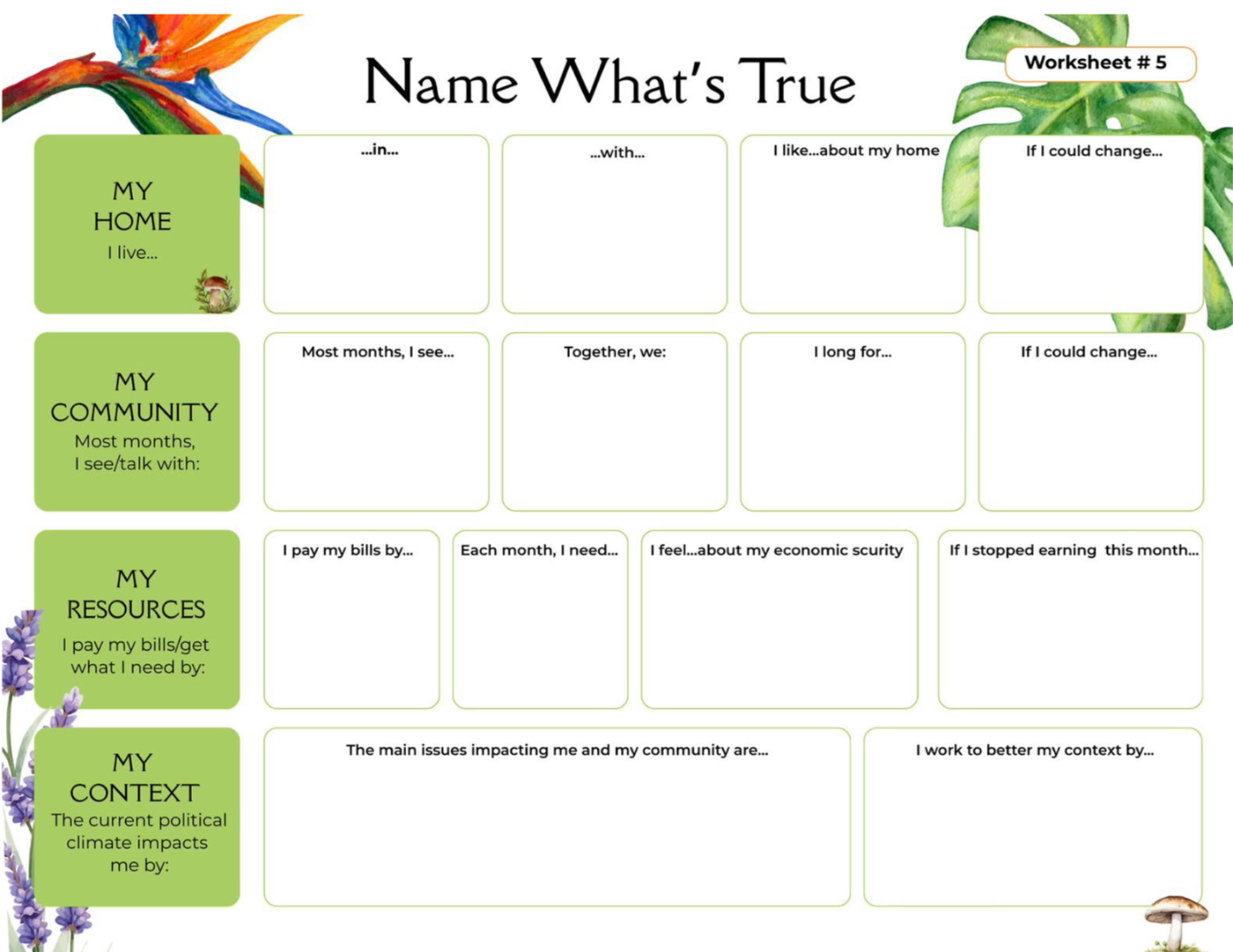
What’s true about the physical home that you live in?
Is it a bright apartment? A cottage? A vehicle? Do you rent, mortgage, or own your home outright?
Who do you live with?
What do you like about your home? Is it the neighborhood? The bathtub? The garden?
What would you change about your home, if you could? Would you like to live close to friends? Would you like to spend less money to live there?
What’s true about the people in your community?
Who do you see at least once a month? Who do you see more than once a week?
What do you do together? Do you exchange information or lemons from their tree or hellos?
What kinds of community relationships or gatherings would you like to be a part of?
If you could change one thing about how you are in community relationships, what would it be? Would you like to regularly be working with people on shared projects? Would you have more people around who know you well?
What’s true about your material resources?
How do you pay for what you need to live? Do you have a job, retirement funds, or rely on the income of another person? Do you rely on credit cards or student loans?
How much money do you need each month to pay for the basic needs each month? These usually include the cost of your housing and utilities, food, health insurance, medicines, and transportation. If this question is overwhelming, that’s useful information! I encourage you to make a note and come back to it.
If you stopped receiving income today, how long would you have to pay for the expenses required to live your life as it is now? Some people would rely on savings and most people in the US live paycheck-to-paycheck so the timeline may be a matter of days or weeks.
What’s true about how our current political reality impacts your life?
Do you or your loved ones fear for their safety? Have you lost your job? Do you spend increasing amounts of time supporting loved ones as they process their fears, worries, and threats? Have you changed how you move around the world?
How do you work to better your context? Have you joined people in protests and advocacy? Did you stop paying money to companies that don’t align with your values? Have you been gathering your neighbors into new ways of relating to each other?
Sometimes, the intention we have for our day-to-day life doesn't align with what's ultimately true. When we take a moment to pause, assess, and get curious, we have already taken the first step we need in order to make adjustments. Is this true for you? What's different about your life right now than you had planned?
Naming what’s true helped us get to where we are now
Where we live now, in the south of the Netherlands, we bask in our car-free life. We walk, bike, and bus around our city safely, including to the train station that connects us to the whole country and continent. Three mornings a week, I go to the well-funded community center and take Netherlander (Dutch) lessons from a rotating cast of elder retirees who volunteer their time to teach me and others from around the world.
Now, the Netherlands is not a perfect place, because no place is, and certainly not a place without a history of colonial violence and a current monarchy. I miss my friends and the beavers and bears from my life in the United States. But as expected, our kids enjoy their increased independence in a culture where it’s expected that kids are a part of public life. We started going again to big events like parades with ease now that we don’t fear mass shootings. And I still haven’t adjusted to the lack of co-pays or unexpected bills for my medical care as a person with a chronic illness, but it’s already made my outlook on my financial future feel so much brighter.
The pressures of our world are intense. I hope this exercise will support you to take a moment and feel whatever agency you have to shape your life, whether that’s opening a window, waving to a neighbor, deciding to move in with your best friend, or starting a journey to relocate to your grandmother’s homeland.
About the author
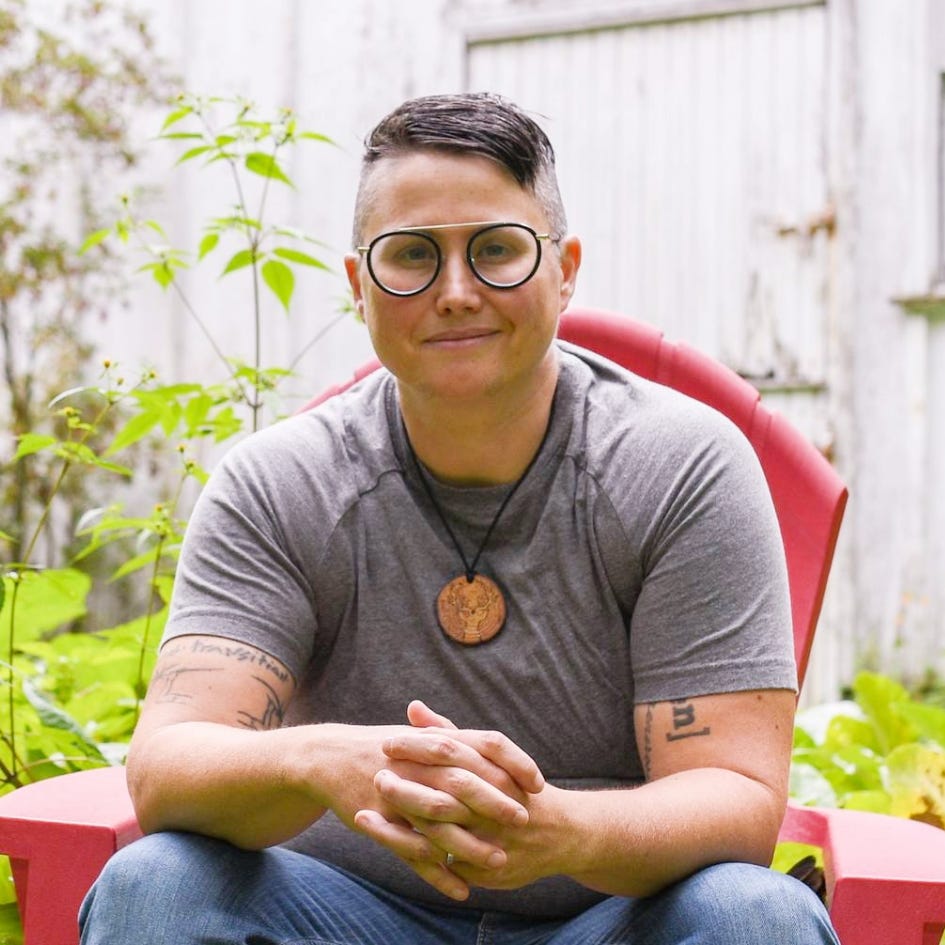
Grover Wehman-Brown is the co-author of Should I Stay or Should I Go? A step-by-step workbook to help you decide if leaving the US is right for you and the Substack newsletter, You've Got Mail (only Butch and platonic). Their narrative strategy and communications work has supported organizations working for housing, racial, and economic justice in the United States. They are now the co-founder of Strategic Creations, a creative studio that helps launch new projects into the world from their new home base in the Netherlands. In 2025 they relocated their home-base from Western Massachusetts to the Netherlands. Here, they joyfully haul groceries and furniture on their bicycle, walk their energetic dog Tater Tot, write, create, and build life with their wife, Nova, and two amazing kids.
 | A guest post by
|
Such good food for thought. Thank you, Grover. And I'll say hello to the beavers and bears for you here in Western Mass. 🦫🐻🤎
for anyone voraciously consuming ex-pat content (as i was before i made the leap to leave the U.S.) i wrote about this using a framework of kink for the decision making process! https://askasub.substack.com/p/im-leaving-the-us