Should queer and trans people work in the trades?
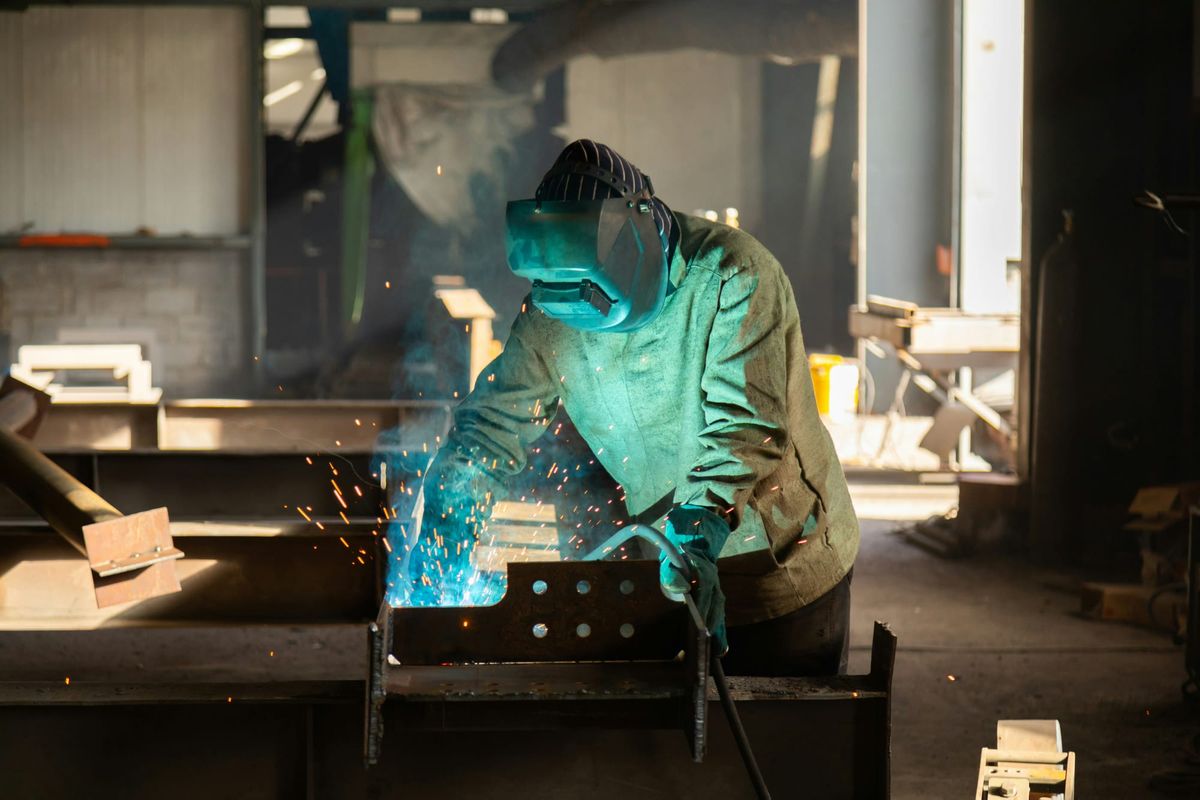
With AI destabilizing every industry, many of us are wondering which jobs will survive unscathed. I've been talking to friends, acquaintances, colleagues, and, admittedly, strangers on long train rides about this, and we always arrive at the same finish line: skilled trades, like electrical, mechanical, and construction work.
On a five-hour train ride from Chicago to St. Louis, I spoke with an electrician who earns six figures. I know people who have paid off their entire mortgage 5 to 10 years early thanks to a lifelong career in construction. And I've met queer people who work full-time in the trades so that their partners can stay home full-time with their young children.
Trade jobs look good on paper, but I've heard mixed reviews of the actual workplace culture. For months now, I've been sitting with the question: Should queer and trans people work in the trades?
Two quick announcements before we dive deep into this topic:
Beyond the anecdotes I listed above, here are a few more pros about the skilled trade industry:
- Trade school programs cost anywhere from $5,000 to $20,000, not including tools. (Source: Edvisors).
- In contrast, the average tuition for a professional degree is $39,406 per year (Education Data Initiative). Multiplied by four years, that's roughly $160,000 in tuition compared to $20,000 for trade school.
- Many trade school graduates carry zero student loan debt, and 47% of tradesworkers now earn more than the average college graduate. (The Birmingham Group)
- For every five people working in the trades who are about to retire, only two replacements are entering the workforce (Department of Education). This means, in the next few years, there will be far more open jobs in the skilled trades than there are workers who are trained to do those jobs.
- Almost 91% of skilled tradesworkers feel satisfied with their careers. (Forbes)
Cultural acceptance can be a matter of life and death
All the statistics sound lovely, but I wondered: What is it really like to work in the trades as a queer and/or trans person?
Last week, I published Nichole Foster's story. She's a two-spirit carpenter and boilermaker who left the trades because workplace discrimination put her life at risk.
On a job site, Nichole was assigned the hardest task on the job — hanging 10x8 panels on the roof in the middle of July — just because her boss saw her as cocky. "But really, I barely said two words since I got there," Nichole tells Queer & Trans Wealth.
At the end of the shift, the workers were supposed to review the day and make sure everyone's safe — but no one checked in on Nichole. She said, "I ended up getting horrible heat stroke... It got to the point where I was throwing tools down the hole, because I thought someone's gonna hear me."
Nichole was up there for an extra hour before she could finally manage to climb down. Instead of asking if Nichole needed medical assistance, her supervisor told her to gather her tools and go home. Nichole says that lack of care was one of the breaking points that led to quitting the trades. She said, "Not having that representation for me was hard, and I did end up leaving."
Unions secure financial stability and safety on the job
Nichole enrolled in trade school because of the promise of higher wages. Her first job after school was in Denver. "They paid my cousin and [me] $13 an hour," she says. "And for me, coming from $9 an hour, that's a significant jump, right? But the minimum wage in Denver was $18."
Nichole lived in a hostel for a few months to save money for an apartment. She also had to pay upfront for tools and personal protective equipment (PPE). Traveling tradesworkers also have to pay for their own travel expenses upfront, even though jobs in different cities pay $60 to $80 per hour, Nichole says.
"My finances didn't really improve until I got to the union." The union helped Nichole advocate for fair wages that helped her build financial stability.
Nichole says that unions also:
- Cover the cost of training and apprenticeships so you can "earn as you learn" while avoiding student loans
- Advocate for workers to receive higher pay and promotions, including overtime pay
- Pay for business and managerial training so workers can move up at work, or start their own businesses
- Provide health insurance and retirement packages
- Provide free online college courses for family members, among many other benefits
Beyond the numbers
From my conversation with Nichole and others in the field, I learned that tradesworkers have a deeper sense of pride and connection to their work. Assuming that your job is a good fit, building or repairing something with your own to hands brings self-esteem and confidence.
There are full-time jobs with benefits within the industry, but there are also people who work gig-to-gig or start their own businesses. Some workers prefer the financial stability of a full-time job, while other workers like having freedom to work when they need to. Some people prefer to start their own businesses, but this route requires seed funding and managerial training.
Despite all of the challenges, there's a culture shift happening in the trades, thanks to people like Nichole, who support women, queer, trans, and BIPOC tradesworkers so they can stay in the field through retirement.
After leaving the trades, Nichole joined Colorado Jobs with Justice to spearhead a program called Equitable Possibilities in Construction (E.P.I.C.). She supported women, queer, and BIPOC tradesworkers to make sure they stay in the field until retirement.
After E.P.I.C., Nichole realized, "It's also very important for specifically Native tradeswomen to have a space to be safe in." In 2023, alongside two fellow organizers, Nichole created the International Native Women in the Trades, INWIT for short. INWIT connects Native women across the country. "That way, if they're traveling, they can buddy up and get to know each other."
Alongside organizers like Nichole, queer and trans people are forming affinity groups, like the Campaign for Historic Trades out of Maryland and Build Out Alliance, which operates in multiple cities.
Bottom line: There are paths to financial stability for queer and trans folks in the trades — but it's not a decision to be made lightly, and you can't do it alone. Leaning on your community and local union keeps you safe — and paid.